5 Signs Your Windows Won’t Make It Through Another Winter
Dec 9, 2025
Winter in New Jersey and Pennsylvania doesn’t just test your patience—it tests every component of your home. And few components face a tougher challenge than your windows. When temperatures plummet below freezing, winds gust across the Delaware Valley, and ice storms coat everything in sight, your windows stand as the thin barrier between comfort and misery.
Over 35 years serving homeowners throughout the region, we’ve seen the same pattern countless times: windows that limped through previous winters finally fail when you need them most. The homeowner who noticed a small draft in October is calling us in January with ice forming on their window sills and a $400 heating bill.
The good news? Failing windows telegraph their problems well before catastrophic failure. If you know what to look for now—in fall, before winter arrives—you can make an informed decision about replacement rather than facing an emergency repair situation in the middle of a cold snap.
This guide will help you evaluate whether your windows are truly ready for another Pennsylvania or New Jersey winter, or whether this is the year to finally replace them.
Why Winter Is Your Window's Toughest Test
Windows face year-round challenges, but winter in our region creates a perfect storm of stresses that expose every weakness.
Temperature Extremes Create Expansion and Contraction Cycles
When outdoor temperatures drop to 15°F while you maintain 68°F inside, that 53-degree temperature difference creates tremendous stress on window materials. Glass expands and contracts. Frame materials shift. Seals that were barely adequate in moderate weather fail under this stress.
Freeze-thaw Cycles are Particularly Destructive
Pennsylvania and New Jersey experience an average of 40-60 freeze-thaw cycles each winter—days when temperatures rise above freezing, then drop back below. Any moisture that penetrates window components during the thaw phase expands when it refreezes, progressively widening cracks and gaps. This cycle accelerates deterioration exponentially compared to consistently cold climates.
Wind Pressure Increases Dramatically
Winter winds in our region commonly reach 25-35 mph, with gusts exceeding 50 mph during storms. Wind pressure tests every seal, every gap, and every weak point in your window assembly. The DOE estimates that a 1/8-inch gap around a typical double-hung window allows the same air infiltration as leaving a 2.4-inch hole open in your wall. Wind makes those gaps far worse.
Heating System Operation Magnifies Problems
Your furnace creates slight positive pressure inside your home, pushing warm, humid air toward every opening. When that air encounters cold window surfaces and exterior gaps, you get condensation, ice buildup, and dramatic heat loss. A failing window can lose 10-15 times more heat than a solid, insulated wall section of the same size.
Get Your New Roof Now. $0 Down + No Payments Until 2028 +
Free Roof/Attic Inspection
Recent Posts
If you’re replacing windows, you’ll almost always hear two terms: full flange (new construction) windows and pocket (insert) replacement windows...

Choosing replacement windows doesn’t have to be complicated.
Contrary to popular belief, winter is an excellent time for significant home upgrades, particularly window and siding replacement...
Snow and Ice Accumulation Adds Physical Stress
Ice dams, snow accumulation on sills, and freezing rain all add weight and moisture exposure that windows must withstand. Old weatherstripping and deteriorating seals that barely function in dry conditions completely fail when ice forms in and around them.
These combined stresses explain why windows that seemed “okay” in September can become serious problems by January. Let’s examine the specific warning signs that indicate your windows are at risk this winter.
Sign 1: Drafts You Can Feel (Or See)
The most immediately noticeable sign of window failure is air infiltration—and if you can feel it, you’re losing significant money on heating costs.
How To Test for Drafts
On a windy day (ideally when it’s cold outside), hold a lit candle or incense stick near the edges of your closed and locked windows. Move slowly around the entire perimeter—sides, top, bottom, and where the sashes meet. If the flame flickers or smoke blows sideways, you have air infiltration.
Another test: dampen your hand and hold it near window edges on a cold day. You’ll feel temperature differences where air is moving through gaps.
What Causes Drafts
Weatherstripping deteriorates over time. Most window weatherstripping is designed to last 7-10 years. If your windows are older than that and have never had weatherstripping replaced, it’s almost certainly compromised. Rubber hardens and cracks. Foam compresses and tears. Felt material wears thin.
Frame warping creates gaps. Wood frames warp as they absorb and release moisture. Vinyl frames can warp from thermal expansion, particularly on south and west-facing windows that experience intense sun exposure followed by cold nights.
Sash misalignment develops as balance mechanisms fail and frames shift. Even with intact weatherstripping, misaligned sashes can’t seal properly. This is especially common in older double-hung windows where the sash weight systems have deteriorated.
Poor original installation leaves permanent gaps. If windows weren’t properly shimmed and sealed during installation, gaps between the window frame and rough opening will allow air infiltration that gets worse over time as any sealing materials deteriorate.
The Financial Impact
The Department of Energy estimates that air leakage accounts for 25-40% of the energy used for heating and cooling in a typical home. Windows and doors are responsible for roughly half of that leakage. For a home with $200 monthly winter heating bills, drafty windows could be costing $25-40 per month, or $100-160 for the four-month winter season.
Multiply that by several years of deferring replacement, and you’re spending hundreds or thousands on wasted energy that could have funded new, efficient windows.
Why This Gets Worse in Winter
Cold temperatures make sealing materials brittle. The rubber weatherstripping that remained somewhat pliable in summer becomes rigid in freezing temperatures, pulling away from surfaces and creating gaps. Wind pressure increases infiltration dramatically—a small gap that allows minimal airflow on calm days becomes a serious problem when 30 mph winds drive cold air through it.
If you’re feeling drafts now in fall, you can expect them to be significantly worse once temperatures drop below freezing and winter winds arrive.
Sign 2: Condensation Between Glass Panes
If you see fog, moisture, or condensation between the panes of your double or triple-pane windows that you can’t wipe away, the seal has failed. This is one of the most definitive signs that your windows won’t make it through another winter.
Understanding Insulated Glass Units (IGUs)
Modern windows use insulated glass units consisting of two or three panes of glass separated by a spacer and sealed around the perimeter. The space between panes is filled with insulating gas—typically argon or krypton—which has better insulating properties than air. This design reduces heat transfer by 50-70% compared to single-pane windows.
When functioning properly, the space between panes is completely sealed and moisture-free. The seal prevents outside air and moisture from entering while keeping insulating gas inside.
What Happens When Seals Fail
Over time, exposure to temperature changes, UV radiation, and moisture causes sealant materials to deteriorate. When the seal breaks even slightly, several things happen:
The insulating gas escapes. Argon and krypton gradually leak out, replaced by regular air. This immediately reduces the window’s insulating value by 20-30%.
Moisture enters the cavity. Even small amounts of atmospheric moisture entering the space between panes causes visible condensation when temperature differences occur. This is what creates the fog or water droplets you see.
The window’s R-value drops dramatically. An insulated window with failed seals performs only marginally better than a single-pane window. The Lawrence Berkeley National Laboratory found that failed IGU seals can reduce window R-value by 50% or more.
Why This Matters For Winter
Failed seals dramatically increase heat loss. According to ENERGY STAR, windows with failed seals can lose 30-50% more heat than properly functioning units. For a home with ten windows with failed seals, this could add $200-400 to winter heating costs in a single season.
The problem accelerates in winter. Temperature differentials between indoors and outdoors are greatest in winter, which increases condensation and makes seal failures more visible and problematic. Internal condensation can freeze at night, potentially causing further damage to the IGU.
Can Failed Seals Be Repaired?
Unfortunately, no. Once the seal fails on an insulated glass unit, the entire sash needs replacement. Some companies offer “defogging” services that drill holes to remove moisture, but this doesn’t restore insulating gas or seal integrity. These are temporary cosmetic fixes at best.
If you have condensation between panes in multiple windows, it’s a strong indicator that all your windows are of similar age and condition. If several have already failed, others will likely fail soon. This winter’s temperature extremes may push marginal seals over the edge into complete failure.
Sign 3: Ice Buildup on Interior Surfaces
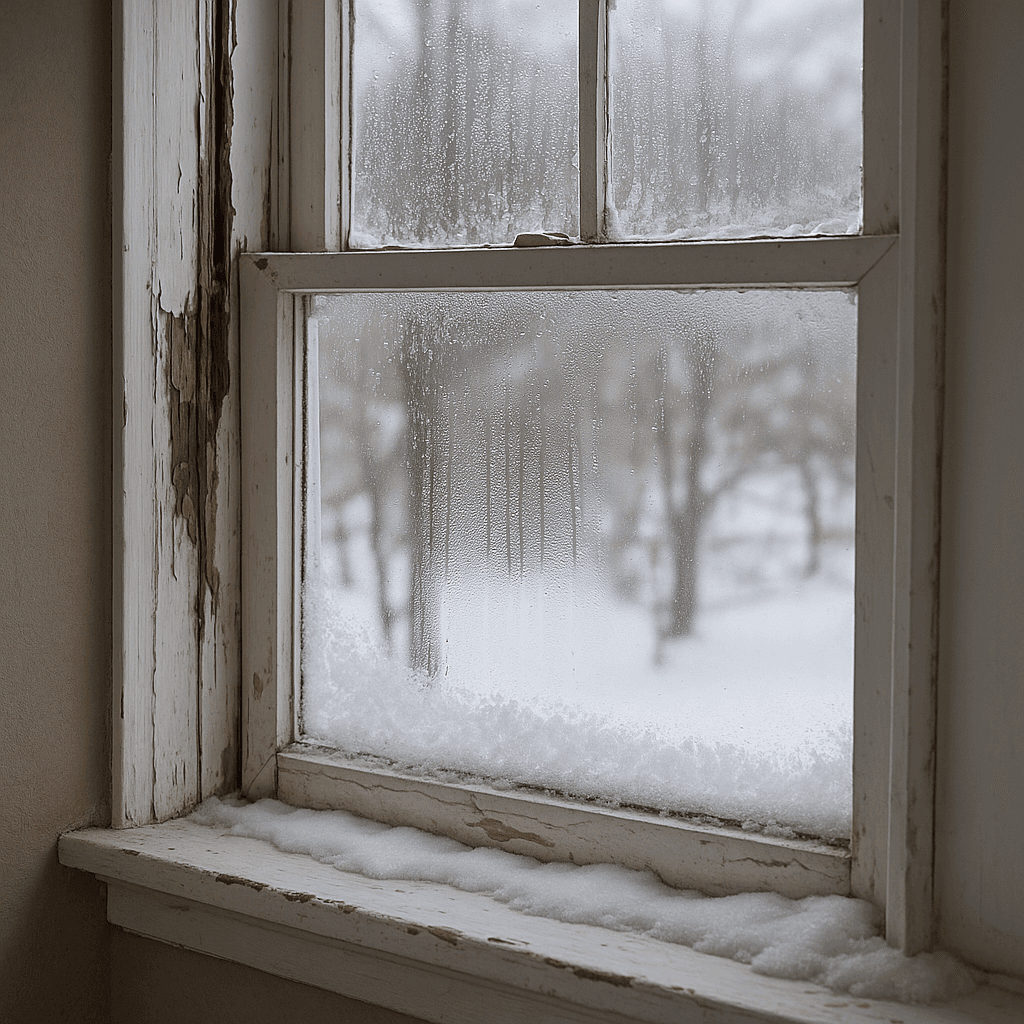
If you see ice, frost, or heavy condensation forming on the interior surfaces of your windows during cold weather, it’s one of the most serious warning signs that your windows won’t survive another winter.
What Interior Ice Means
Ice forming on the inside of your windows indicates several problems occurring simultaneously:
Severe air leakage is allowing extremely cold air to reach interior glass surfaces. Significant heat loss through the window is preventing interior surfaces from staying warm enough to prevent condensation from freezing.
High interior humidity combined with cold surfaces creates perfect conditions for ice formation. Indoor air at 70°F and 40% relative humidity has a dew point around 45°F. When window surfaces drop below this temperature, moisture condenses. When surfaces drop to 32°F or below, that moisture freezes.
Why This is Serious
Ice formation indicates extreme heat loss. Windows cold enough to freeze interior condensation are losing massive amounts of heat energy. The DOE estimates that windows with interior ice formation can lose 3-5 times more heat than properly functioning windows.
Ice damages window components. Repeated freeze-thaw cycles crack glass, warp frames, and destroy weatherstripping. Each freeze cycle expands existing cracks and gaps, accelerating deterioration.
Ice creates moisture problems. When ice melts, water runs down to sills and frames. Over time, this leads to wood rot, mold growth, and damage to interior finishes like paint and wallpaper. We’ve seen situations where ice formation ignored for multiple winters caused thousands in interior water damage and mold remediation costs.
Health and Comfort Impacts
Cold window surfaces create uncomfortable drafts even without direct air leakage. Cold glass surfaces cool the air near them, creating downward convection currents that feel like drafts even when windows are sealed. This makes rooms near windows uncomfortable and difficult to heat.
Excessive moisture from condensation promotes mold growth. Mold on window frames and surrounding walls creates health risks, particularly for people with respiratory conditions or allergies.
Regional Context for NJ and PA
Our region experiences an average of 120-140 days per year with minimum temperatures below 40°F, and 30-50 days below 20°F. Any of these days can produce interior ice on failing windows. Once you see ice formation early in the season (November or December), you can expect it to worsen significantly as January and February bring the coldest temperatures.
If you’re seeing interior ice in fall or early winter, your windows are in critical condition. They will not perform adequately through the coldest months ahead, and you’re at risk for both comfort problems and structural damage.
Sign 4: Skyrocketing Heating Bills
Sometimes failing windows announce their problems through your utility bills before you notice physical symptoms.
Comparing Energy Costs
Look at your heating bills from the past 2-3 years for the same months (comparing December to December, January to January, etc.). Adjust for rate changes by comparing therms or kilowatt-hours used rather than dollar amounts.
If your energy consumption has increased 15-20% or more despite similar weather conditions and usage patterns, failing windows are a likely culprit—especially if you haven’t changed anything else about your home’s systems or insulation.
Understanding Window Heat Loss
The Department of Energy estimates that heat loss through windows accounts for 25-30% of residential heating energy use. In older homes with original windows, this percentage can reach 35-40%. For a home with $2,400 annual heating costs, windows might be responsible for $600-960 of that expense.
When windows fail, their contribution to heat loss increases dramatically. Single-pane windows have an R-value of approximately 1. Modern double-pane low-E windows have R-values of 3-4. Windows with failed seals, air leaks, and degraded frames might perform at R-1.5 or less—barely better than single-pane.
Real-World Cost Impact in NJ and PA
Let’s look at concrete numbers for our region. According to the U.S. Energy Information Administration, the average Pennsylvania home uses approximately 50 million BTUs for heating annually. New Jersey homes average slightly less at 45 million BTUs due to milder winters.
For a typical 2,000 square foot home with natural gas heat in our region:
- Annual heating cost: $1,200-1,800 depending on gas prices
- Heat loss through older windows: $360-720 (30-40% of total)
- Potential savings with modern replacement windows: $180-360 annually (50% reduction in window heat loss)
Those savings compound over time. Over 10 years, you could save $1,800-3,600 in energy costs—a significant portion of window replacement costs recovered through utility bill reduction alone.
Other Factors Affecting Heating Costs
Before blaming windows entirely, consider whether other factors have changed:
- Thermostat settings (are you keeping the home warmer?)
- Home occupancy patterns (more people home during the day?)
- HVAC system age and efficiency (has the furnace deteriorated?)
- Insulation condition (has attic or wall insulation settled or degraded?)
However, if nothing else has changed and your heating bills are rising, windows are the most likely explanation—particularly if you also notice drafts, condensation, or operational problems.
The Winter Acceleration Effect
Heat loss through windows isn’t linear—it accelerates in extreme cold. A window that loses moderate amounts of heat at 40°F loses dramatically more at 10°F. The thermal conductivity difference increases, air infiltration worsens in high winds, and your furnace runs nearly continuously trying to compensate.
This means if you’ve seen moderate bill increases during mild fall weather, you should expect dramatic increases once deep winter cold arrives.
Sign 5: Visible Frame Damage or Decay
Physical damage to window frames is often the most obvious sign of windows nearing end-of-life, but many homeowners don’t realize how serious relatively minor-looking damage can become during winter.
Wood Frame Issues
Wood windows are beautiful but vulnerable to moisture damage. Warning signs include:
Soft, spongy, or crumbling wood when you press on the frame, particularly at corners and sills. This indicates rot has set in. Wood rot spreads and accelerates in winter when freeze-thaw cycles force water deeper into wood fibers.
Peeling or bubbling paint, especially on exterior surfaces. Paint failure indicates moisture is penetrating the wood from outside or working through from inside, suggesting seal failures and water infiltration.
Visible cracks or separations in wood components. Wood expands and contracts with moisture and temperature changes. Cracks allow water infiltration that leads to rot and accelerates during winter freeze-thaw cycles.
Discoloration or staining, particularly dark spots that indicate water damage or mold growth.
Vinyl Frame Problems
Vinyl frames are low-maintenance but not indestructible. Issues include:
Warping or bowing, particularly on south and west-facing windows. Vinyl expands significantly with heat exposure. Warped vinyl cannot be straightened—the window will never seal properly again. Winter cold may temporarily improve appearance, but the damage is permanent, and gaps will allow air infiltration.
Cracks or brittleness. UV exposure and age make vinyl brittle. Winter cold exacerbates this, making brittle vinyl prone to cracking under stress. Cracked vinyl frames allow air and water infiltration.
Discoloration or fading. While cosmetic, significant fading indicates UV degradation that has likely also compromised the vinyl’s structural integrity.
Metal Frame Concerns
Aluminum and steel frames face different challenges:
Corrosion or pitting on metal surfaces. Once started, corrosion accelerates in winter when salt from roads and de-icing products attacks metal. Corroded frames don’t seal properly and will worsen rapidly.
Thermal breaks failure. Better metal windows include thermal breaks—plastic separators that prevent metal from conducting cold from outside to inside. If thermal breaks fail, the metal frame becomes extremely cold, creating condensation and ice problems.
Operational frame Damage
Beyond material deterioration, functional damage indicates serious problems:
Frames separating from walls. Gaps between the window frame and your home’s rough opening allow massive air infiltration and water entry. These gaps often result from poor original installation or foundation settling, and they worsen over time.
Sashes that don’t fit properly in frames. If you can see daylight around closed windows or if windows rattle when locked, frame or sash warping has created gaps that will leak air dramatically in winter.
Why Winter Accelerates Frame Damage
Moisture is frame deterioration’s primary enemy, and winter provides abundant moisture through condensation, ice formation, and snow. Water penetrating damaged frames freezes and expands, widening cracks and accelerating rot.
Temperature swings stress damaged materials. A frame with small cracks in fall may develop major separation in winter as expansion and contraction cycles open those cracks wider.
The combination of moisture, freezing temperatures, and stress means that frames showing damage now will be significantly worse by spring. Frame damage doesn’t heal—it only progresses.
The Real Cost of Waiting Until Spring
Many homeowners who identify window problems in fall decide to “make it through one more winter” and address the issues in spring. While understandable, this decision typically costs far more than immediate action.
Accumulated Energy Waste
Every month you delay replacement, you’re paying excess heating costs. If failing windows are costing $50-75 monthly in excess heating during a four-month winter, that’s $200-300 in wasted energy. Over 2-3 years of “one more winter,” you’re spending $600-900 that could have funded a portion of new windows.
Accelerated Secondary Damage
Failing windows don’t just waste energy—they cause collateral damage. Water infiltration from condensation and ice leads to:
Wood rot in window frames extending to wall framing. We’ve seen cases where 2-3 years of deferred window replacement led to $3,000-5,000 in wall framing repair costs.
Mold growth on window frames, sills, and adjacent walls. Mold remediation costs $500-1,500 per affected area, and health impacts can be serious.
Interior finish damage including paint failure, wallpaper damage, and floor damage from water running down walls. Repairing this damage can cost hundreds to thousands depending on extent.
Insulation deterioration when moisture reaches wall cavities. Wet insulation loses R-value and must be replaced.
Comfort and Quality of Life
Beyond financial costs, there’s the daily discomfort of living with failing windows through an entire winter: cold rooms near windows, drafts making spaces unusable, ice formation requiring constant cleaning, and higher thermostat settings that still don’t maintain comfort.
For many families, the reduction in home livability is worth addressing immediately rather than enduring for months.
Spring Installation Challenges
Spring is peak season for window replacement. Waiting until spring means:
- Longer lead times for product delivery and installation scheduling
- Potentially higher prices during peak demand season
- Continued energy waste through additional months
Installing in late fall or winter often means better contractor availability, more flexible scheduling, and immediate benefit from new windows’ energy savings.
Professional Winter Installation
Modern installation techniques make winter window replacement entirely feasible. Experienced installers complete each window in 30-45 minutes, minimizing cold air exposure. Proper preparation and technique prevent interior damage or discomfort during installation.
At Window Place Plus, we work year-round in New Jersey and Pennsylvania. We’ve installed windows in every weather condition and know how to protect your home and maintain your comfort during the process.
What Winter-Ready Windows Should Deliver
Understanding what properly functioning windows should provide helps you evaluate whether your current windows are adequate.
Thermal Performance
Modern ENERGY STAR certified windows appropriate for our region deliver:
- U-factors of 0.30 or lower (measuring heat transfer resistance)
- Solar Heat Gain Coefficients of 0.25-0.40 (balancing winter solar gain with summer heat rejection)
- R-values of 3.5-4.5 or higher for the complete window assembly
For comparison, single-pane windows have U-factors around 1.0 and R-values around 1. Even older double-pane windows typically have U-factors of 0.45-0.60—50-100% worse than modern windows.
Air Infiltration Control
Quality windows should have air leakage ratings of 0.3 cubic feet per minute per square foot of window area or less. This is the ENERGY STAR requirement and represents excellent air sealing.
For comparison, windows meeting only basic building code requirements may allow 1.5 cfm/sf or more—five times more air leakage.
Condensation Resistance
The Condensation Resistance (CR) rating measures a window’s ability to resist condensation. Quality windows suitable for our climate should have CR ratings of 50 or higher. Higher numbers are better—ratings of 60+ indicate excellent condensation resistance.
Windows with CR ratings below 40 are prone to condensation problems in our region’s winter conditions.
Durability and Low Maintenance
Modern windows should require minimal maintenance while lasting 25-30+ years. Quality vinyl or fiberglass frames don’t require painting, resist moisture damage, and maintain their operation throughout their lifespan.
Operational Ease
Windows should open and close smoothly with minimal force throughout their life. Quality balance systems, durable hardware, and precise engineering ensure windows remain easy to operate for decades.
If your current windows fail to deliver these performance levels, they’re costing you comfort, money, and peace of mind every day—especially during winter.
Frequently Asked Questions
For most NJ/PA homeowners, quality double-pane windows provide the best value. The additional cost of triple-pane windows (25-35% more) often takes too long to recoup through energy savings alone.
Yes. According to Remodeling Magazine’s 2024 Cost vs. Value Report, window replacement returns 68-70% of its cost in added home value in the Philadelphia metro area.
Don't Risk Another Winter with Failing Windows
If you’ve identified one or more of these warning signs in your windows, the question isn’t whether to replace them—it’s when. Waiting until spring means months of wasted energy, daily discomfort, and risk of costly secondary damage.
Take action now:
Contact Window Place Plus today for a free, comprehensive home assessment. We’ll evaluate your windows’ condition, identify specific problems, and provide honest guidance about whether repair or replacement makes sense for your situation.
Our 35 years of experience serving New Jersey and Pennsylvania homeowners means we understand exactly what windows must withstand in our region. We’ll help you select windows that will perform reliably for decades, not just survive another winter.
Schedule your free consultation today.
Window Place Plus serves homeowners throughout New Jersey and Pennsylvania with expert window assessment and professional installation. Don’t let failing windows cost you comfort and money this winter—let us help you find the right solution.
Window Place Plus | Serving NJ & PA for 35 Years | Schedule Your Free Consultation
What Our Customers Are Saying
Great service and excellent pricing. Windows are great and look fantastic. I could not recommend more. If you need a painless experience without pushy salesman or prices that are astronomical, window place plus is your best choice!
Window Place Plus replaced our front door and did a great job. They were great to work with from the sales process to the install. Both our sales person, Jeff; PM, Rob; and installer, Tom were all awesome and incredibly helpful, communicative and friendly. I'll definitely be using them again in the future when we're ready to replace our siding and windows.
They did a great job. Highly recommend them they did exactly what they said they would plus Lifetime warranty on the window. You can’t beat that. I’ll definitely use them again for other windows in the future!
Jackie and Sergio were an absolute pleasure to work with. Their representative was very informative and the windows they install are beautiful and efficient! 5 stars
Thrilled with our new front door from The Window Place Plus. Tomasz was very helpful in selecting the perfect front door for our home. The choices Provia provides is unmatched and I couldn’t be more pleased with the install. I wanted to preserve our original 100 year old side lights and trim and they were able to install our new door no problem.
Had all windows in house replaced. It was a great experience from start to finish. Sales man was very knowledgeable, the windows were installed perfectly. The work crew knew what they were doing and it showed. They were responsive to any concerns I had and I am very happy with the results
Wonderful experience with The window place plus from beginning to end. It’s hard to find reliable contractors that show up and stay informative. The team was great!!! Would recommend them to everyone who is looking for window installation.



Visit Our Team
Mon-Fri: 8am – 8pm
Sat-Sun: 9am – 5pm